Top Two Primary is back, with twice the magical thinking.

votePhoto: Arizona Capitol Times

As promised, the brain trust of Arizona centrist business establishment types (country club Republicans and corporate Dems) that failed to pass Prop 121 in 2012 plan to return with a slightly altered version of it in 2016.

Former Phoenix Mayor Paul Johnson, who led the campaign for Proposition 121 and is spearheading the 2016 measure, said organizers of the proposed Open Nonpartisan Primary Election plan on doing things a bit differently this time around.

“We get we lost last time,” Johnson said. “You don’t have to remind me of that. I get that one. So you have to look at why did I lose and what assets are out there that I can utilize to try to expand it.

Top Two primaries (also known as open or jungle primaries) are based on the surreal premise that having only the top two vote getters in the primary (regardless of party affiliation) advance to the general will improve government by enabling more “moderate” (read: business-friendly) candidates to defeat partisan ideologues. It seems reasonable if you don’t think about it for more than thirty seconds (and proponents are dearly hoping you won’t) but, alas, a cursory examination of the wildly optimistic promises of this scheme reveals its implausibility as a statewide solution for Arizona’s political dysfunction.

Read more

NY Times: Justice John Roberts opinion not supported by the facts in gutting the Voting Rights Act

Chief Justice John Roberts, who established his reputation during the Reagan administration with his attacks on the Voting Rights Act, Chief Justice Roberts’ Long War Against the Voting Rights Act, rejected the empirical evidence to assert that discrimination no longer occurs in “covered jurisdictions” in striking down the coverage formula enacted by a near unanimous Congress in Section 4 of the Voting Rights Act of 1965, which had the effect of leaving the U.S. Justice Department preclearance provisions in Section 5 in suspension.

Justice Roberts opinion in Shelby County v. Holder opened the floodgates to new GOP voter suppression efforts in those covered jurisdictions within hours of the decision. After Ruling, States Rush to Enact Voting Laws.

New research demonstrates how Justice Roberts’ opinion was full-o’-crap. The New York Times editorializes, Voting Rights, by the Numbers:

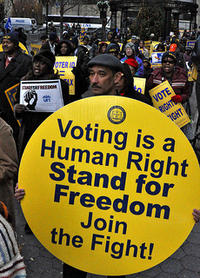
Voting-RightsWhen the Supreme Court struck down the heart of the Voting Rights Act in 2013, its main argument was that the law was outdated.

Discrimination against minority voters may have been pervasive in the 1960s when the law was passed, Chief Justice John Roberts Jr. wrote, but “nearly 50 years later, things have changed dramatically.” In this simplistic account, the law was still punishing states and local governments for sins they supposedly stopped committing years ago.

The chief justice’s destructive cure for this was to throw out the formula Congress devised in 1965 that required all or parts of 16 states with long histories of overt racial discrimination in voting, most in the South, to get approval from the federal government for any proposed change to their voting laws. This process, known as preclearance, stopped hundreds of discriminatory new laws from taking effect, and deterred lawmakers from introducing countless more.

But Chief Justice Roberts, writing for a 5-4 majority, invalidated the formula because “today’s statistics tell an entirely different story.”

Well, do they? A comprehensive new study by a historian of the Voting Rights Act provides a fresh trove of empirical evidence to refute that assertion. The study by J. Morgan Kousser, a professor of history and social science at the California Institute of Technology, examines more than 4,100 voting-rights cases, Justice Department inquiries, settlements and changes to laws in response to the threat of lawsuits around the country where the final result favored minority voters.

It found that from 1957 until 2013, more than 90 percent of these legal “events” occurred in jurisdictions that were required to preclear their voting changes. The study also provides evidence that the number of successful voting-rights suits has gone down in recent years, not because there is less discrimination, but because several Supreme Court decisions have made them harder to win.

Read more

It’s game on! Crazy Uncle Joe Arpaio contempt of court hearing next week

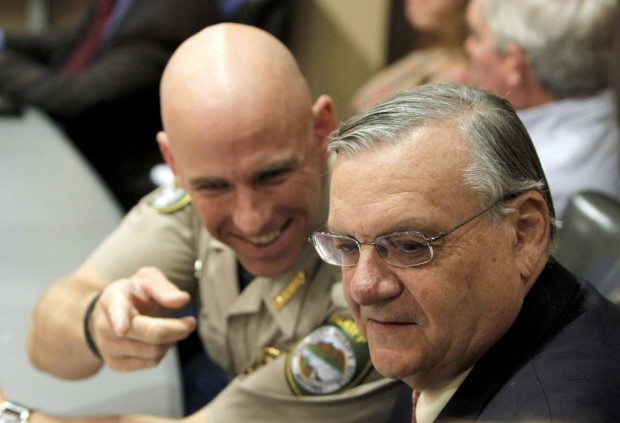
Babeu-ArpaioIt’s game on! Crazy Uncle Joe Arpaio is having a bad week, and its going to get worse next week he goes on trial for contempt of court. We may finally be seeing the beginning of the end of the “most corrupt sheriff in America.”

This week the Ninth Circuit Court of Appeals upheld U.S. District Judge G. Murray Snow’s 2013 ruling against the Maricopa County Sheriff’s Office for illegal racial-profiling. Racial-profiling ruling vs. Arpaio largely upheld:

A three-judge panel of the 9th U.S. Circuit Court of Appeals largely upheld a federal judge’s ruling against the Maricopa County Sheriff’s Office in a racial-profiling case, according to a statement filed Wednesday.

In 2013, U.S. District Judge G. Murray Snow found Sheriff Joe Arpaio’s deputies had disproportionately targeted Latinos during their traffic operations. The ruling extended to both regular and “saturation” patrols, where deputies would flood predominantly Hispanic neighborhoods.

Arpaio’s subsequent appeal did not contest the saturation patrol finding, only the portion dealing with regular patrols.

The appeals court upheld the federal judge’s inclusion of non-saturation patrols in his finding of racial profiling, and additionally maintained his rulings of corrective actions that included training and video-recording of traffic stops.

“I think it marks a significant victory,” said Cecillia Wang, a plaintiffs’ attorney with the American Civil Liberties Union’s Immigrants’ Rights Project. “Once again the sheriff’s efforts to continue his policy on immigration enforcement have been rebuffed by a federal court.”

The panel did agree with the appeal in one respect, and ruled that the court-appointed monitor’s oversight of internal investigations must only be related to the constitutional violations.

Read more

(Update) 5th Circuit to hear immigration orders appeal on April 17

5thCircuitWe now know who is serving on the three judge panel of the 5th Circuit Court of Appeals hearing the Obama administration’s appeal from the order of Judge Andrew Hanen of the U.S. District Court for Texas this Friday.

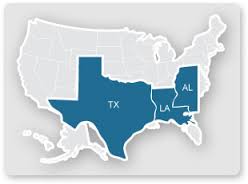
For those of you who are unaware, the 5th Circuit Court of Appeals is the most conservative-dominated appellate court. It has to do with the states that make up the 5th Circuit.

But this panel of judges is particularly fringe conservative. So when it rules in favor of Judge Andrew Hanen, lazy media villagers will hail this as a defeat for the Obama administration and immigrants waiting in the DACA and DAPA programs. They will repeat every ignorant comment that a Tea-Publican politician makes without qualification or clarification, because that is what they do.

But the decision of this panel will eventually be appealed en banc to the full 5th Circuit Court of Appeals and to the U.S. Supreme Court, where recent decisions on immigration law have been in favor of the administration. And then the lazy media villagers will quote every Tea-Publican decrying the decision as the end of the Constitution and the Republic, rather than describing it as a victory for the Obama administration and the DREAMers, because that is what they do.

Read more

Time for another referendum (citizens veto) of GOP voter suppression – HB 2407

ArizonaIn 2013, Arizonans rose up in righteous indignation against the GOP Voter Suppression Act, HB 2305, and qualified a citizens referendum (citizens veto) for the 2014 ballot. In 2014, Tea-Publicans repealed HB 2305 before voters could have the opportunity to vote on it and to make the rejection of the legislature’s action permanent under the Voter protection Act, itself a form of voter suppression.

In 2015, Tea-Publicans returned with a piecemeal attempt to enact HB 2305 as a package of separate bills to make it harder for the citizens of Arizona to pursue a citizens referendum of their voter suppression efforts. Some of those bills didn’t make it (they will be back next year) and others did.

One GOP Voter Suppression bill that passed and that has now been signed by Gov. Doug Ducey is HB 2407 (.pdf), which now makes it much more difficult and expensive for Arizona citizens to exercise their constitutional right to citizens initiatives, referendums and recall. Tea-Publicans are now imposing the “strict compliance” with statutory requirements for referendums to initiatives and recalls as well.

What this means is that petitions can be disqualified for hyper-technical deficiencies such as typographical errors, typeset, line spacing and margins, a missing serial number, incomplete voter information (such as date of signature), an error in the affidavit of signature gatherer or notary public, etc. Despite your best good faith efforts to comply with all the rules, the Secretary of State is now empowered to disqualify petition sheets for such hyper-technical deficiencies.

Read more