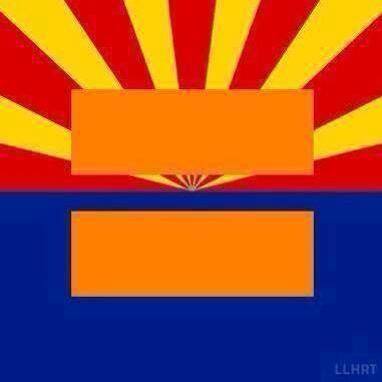
Tucson unites to end all forms of sexual and relationship violence and support survivors. Stand up and speak out against sexual violence by joining the community for an evening of awareness raising, education, media, and performances by local artists, dancers and musicians. Together, we have the power to end sexual violence!
Civil & Human Rights
U.S. Supreme Court rejects two right-wing appeals
A couple of appeals brought by right-wing organizations with hopes that the U.S. Supreme Court would agree to hear their cases had their hopes dashed today when the Court denied their appeals.
The first case is Elane Photography v. Willock, involving a wedding photographer’s refusal to photograph a lesbian couple’s wedding-style ceremony. This is the case most celebrated by Tea-Publicans in the Arizona legislature (along with the Colorado bakery case) for their unanimous support for SB 1062, the Religious Bigotry bill eventually vetoed by Governor Brewer.
The Washington Post reports, Supreme Court won’t review gay commitment photo case:
The Supreme Court Monday declined to consider whether a New Mexico photographer had a free-speech right to refuse service to a same-sex couple who wanted her to record their commitment ceremony.
Without comment, the court said it would not review a decision by the New Mexico Supreme Court that the denial of service violated the state’s public accommodations law, which bans discrimination by those offering their services to the public.
On the obsessive focus on poor people’s morality
Per Gawker:
Ta-Nehisi Coates of the Atlantic and Jonathan Chait of New York have, over the past week, been engaged in something equal parts duel and duet in the pixels of their respective magazine’s websites. Their debate has plumbed the depths of race and racism in America, working out the questions of civic and historical responsibility in a public forum with respect and grace. As readers and citizens we are privileged to bear witness to this dialogue. They’ve also thrown some damn good shade at each other, so let’s look at that.
The Gawker piece provides a quick synopsis of the debate (you should read all the links) and since then Coates (who is the clear winner in my opinion) has followed up with this and this, which I cannot recommend enough.
Second Religious Bigotry bill dies in AZ legislature
Earlier this year I told you about Rep. Steve Montenegro’s (R-Litchfield Park) bill, HB 2481, which sought to make it illegal for government to “require a minister to solemnize a marriage inconsistent with a minister’s sincerely held religious beliefs.” A solution in search of a non-existent problem.
Apparently the Arizona legislature finally realized it was a solution in search of a non-existent problem and killed this bill. Another ‘religious freedom’ bill dies in Legislature:
A bill touted as an attempt to protect religious freedom among clergy and judges has died, following the path of Senate Bill 1062, which was widely denounced as discriminatory against gays and lesbians.
House Bill 2481 would have prevented government from requiring ordained clergy and judges to “solemnize a marriage that is inconsistent with the minister’s sincerely held religious beliefs.”
Mississippi passes the model Religious Bigotry bill
I an curious, will the business community organize opposition the way it did in Arizona to force the governor’s hand to veto this bill? Where is the national outcry that we saw with Arizona’s bill?
Mississippi, a bottom-dweller like Arizona, always competing for “worst” status, has passed its model bill version of SB 1062 earlier passed by the Arizona legislature and vetoed by Governor Jan Brewer. Mississippi Legislature Passes ‘Religious Liberty’ Bill That Legalizes Discrimination Against Gay People:
The Mississippi legislature has passed legislation that would allow people to use their religion to justify discrimination. It seemed last month that the “religious liberty” bill had sufficiently stalled after the House voted to send it a study committee instead of passing it, with many members noting how it could be used to promote discrimination. However, both the House and Senate have approved a conference report on the bill, advancing it to Gov. Phil Bryant (R) with problematic language.
“Religious liberty” bills like the one vetoed in Arizona differ from other states’ “Religious Freedom Restoration Acts” (RFRAs) because they extend religious protections to businesses. Mississippi’s bill has this same problem, because state law already defines a “person” to include “all public and private corporations.” Thus, if Bryant were to sign Mississippi’s bill into law, it would grant all businesses in the state a license to discriminate based on religious grounds.