SCOTUS to hear Obama immigration executive orders arguments on Monday

ImmigrantsOn Monday the Court will hear argument in United States v. Texas, in which Texas and twenty-five other states are challenging the Obama administration’s initiatives deferring removal of millions of unauthorized immigrants.

Simon Lazarus, Senior Counsel to the Constitutional Accountability Center, argues at The New Republic that the challenge by Texas and other statesfaces a host of heavyweight conservative authorities, of recent as well as long-established vintage, strongly supporting President Barack Obama’s position that deferring removal for parents of citizens and permanent residents for three years, subject to individual exceptions on a case-by-case basis, fits within the ample enforcement discretion prescribed by immigration statutes and the Constitution.” Even Conservatives Agree on Obama’s Immigration Powers. Will the Supreme Court?

I recently testified . . . at the request of the Democratic minority on the House Judiciary Committee, at a poorly attended March 15 hearing before the committee’s Task Force on Executive Overreach. Iowa Representative Steve King, the task force’s chairman, railed against the “abuse of executive power.” But as the hearing wore on, Republican members merely perfunctorily pushed back against Democrats’ citations of the breadth of discretionary enforcement authority, as in the 2002 Homeland Security Act—signed by President George W. Bush and enacted by lopsided House and Senate majorities (including Republican members in the hearing room). In terms as direct as it is possible to draft, the act commands DHS to “establish immigration enforcement policies and priorities.” After contrasting this and other Republican-supported provisions with “overheated rhetoric” condemning “the president’s immigration actions,” California Democrat Zoe Lofgren observed, “If you don’t like what’s happening, look in the mirror. It’s what we asked him to do.” To this, Raul Labrador, an Idaho Republican and anti-immigration hard-liner, candidly responded, “I completely agree that sometimes Congress has punted and has given the executive too much authority. … It’s just we don’t want to write precise laws, so we write these broad laws and then we give the executive all this power, all this authority.”
Read more

The science it out: It is about race

Thanks to this concise tweet by Salon‘s Amanda Marcotte

For alerting me to the piece by her fellow Salon writers Sean McElwee and Jason McDaniel on how it truly has been racism, and not economic angst as so many believe, that has fueled the rise of Donald Trump.

The American National Election Studies 2016 Pilot Study, a presidential primary extension of a long-running election survey, asked 1,200 eligible voters about the election, and their views on race, from Jan. 22 – 28, 2016. The poll had a number of questions designed to measure racial animus.

Read more

Trends influencing Arizona’s border region

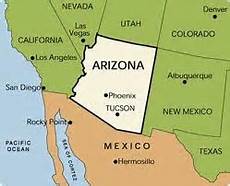
Between 1990 and 2007, the number of undocumented immigrants in the United States more than tripled to 12.2 million. According to a recent study theAZ Mex Map trend is reversing, the illegal immigrant population has fallen to 10.9 million. About six million of the total originated from Mexico. A combination of factors including tighter border controls, the Great Recession, improving economic conditions in Mexico and a declining Mexican birth rate contributed to the change. Arizona’s undocumented population dropped seven percent between 2010 and 2014 to approximately 277,000.

In the muddled realm of immigration law enforcement, it appears that the major contribution made by Arizona’s SB 1070 law was to tarnish the state’s reputation. Despite the continual calls for improved border security and immigration reform, Congress has managed to artfully dodge the issue. In June 2013, the U.S. Senate passed a massive comprehensive immigration reform bill that included additional border security measures (Senators McCain and Flake voted for it) and sent it to House of Representatives. The obstinate House conservatives failed to act, preferring to let the matter become another victim of congressional gridlock.

Read more

That time Bernie Sanders voted to protect the Minutemen

As I was planning to do a post about Democratic Presidential candidate Bernie Sanders’ problems attracting black and Hispanic voters earlier yesterday afternoon, the news broke that Bernie’s wife Jane Sanders visited Maricopa County’s Tent City Jail in Phoenix. She was there for the laudable purpose of calling attention to mistreatment of inmates and immigrants but, of course, Arpaio hijacked the event and turned it into a PR photo op. Most of the local news coverage (warning, autoplays) featured Sanders and Arpaio disagreeing amicably about the jail and about Donald Trump’s candidacy, with Arpaio getting (yet another) earned media opportunity to promote himself in an election year.

Read more

Liberals explain angry white voters. I remain skeptical.

One such piece is by Thomas Frank, the gifted prose-crafter who has made a career out of arguing that angry white voters angrily voting for Republicans are guileless rubes tricked into voting against their own economic interests.

I call it a “mystery” because the working-class white people who make up the bulk of Trump’s fan base show up in amazing numbers for the candidate, filling stadiums and airport hangars, but their views, by and large, do not appear in our prestige newspapers. On their opinion pages, these publications take care to represent demographic categories of nearly every kind, but “blue-collar” is one they persistently overlook. The views of working-class people are so foreign to that universe that when New York Times columnist Nick Kristof wanted to “engage” a Trump supporter last week, he made one up, along with this imaginary person’s responses to his questions.

Read more