Michelle Reagan is terrible, but Steve Gaynor fancies himself the next Kris Kobach

Arizona’s bumbling  Secretary of State, Michelle Reagan, appears headed for defeat in the GOP primary as a result of her demonstrated incompetence and repeated failures in performing the essential functions of her job.

Unfortunately her Republican opponent, millionaire businessman Steve Gaynor, fancies himself the next Kris Kobach, the GOP voter suppression specialist from Kansas.

Daily Kos reports GOP primary frontrunner for Arizona secretary of state wants to stop printing ballots in Spanish:

At a recent debate ahead of Arizona’s Aug. 28 Republican primary for secretary of state, businessman Steve Gaynor advocated for banning the printing of ballots and other election materials in Spanish, arguing that they should only be in English. Furthermore, Gaynor called for repealing the 1975 amendment to the federal Voting Rights Act that, thanks to a history of discrimination by many states—including Arizona itself—requires jurisdictions with large populations of non-English speakers to provide election materials in voters’ native languages.

Given that record of discrimination in a state that’s one-quarter Latino or Native American, it’s astonishing that a candidate would openly advocate for a measure that could make voting considerably more difficult for so many. But with Republicans escalating their voter suppression efforts thanks to a Supreme Court that seems determined to eviscerate the Voting Rights Act, Gaynor’s proposal isn’t an empty threat.
Read more

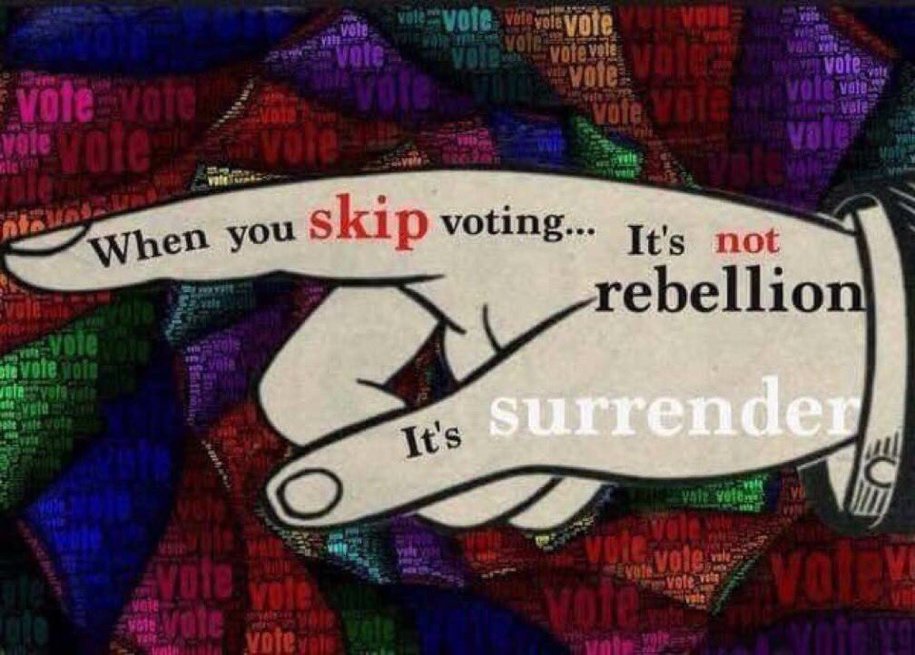
Those who do not vote decide elections as much as those who do

Those who do not vote are as responsible for the outcome of an election as those who do (especially in a low voter participation state like Arizona). New data makes it clear: Nonvoters handed Trump the presidency:

[The] Pew Research Center released an unusually robust survey of the 2016 electorate. In addition to having asked people how they voted, Pew’s team verified that they did, giving us a picture not only of the electorate but also of those who didn’t vote. There are a number of interesting details that emerge from that research, including a breakdown of President Trump’s support that confirms much of his base has backed him enthusiastically since the Republican primaries.

The data also makes another point very clear: Those who didn’t vote are as responsible for the outcome of the election as those who did. As we noted shortly after the election, about 30 percent of Americans were eligible to vote but decided not to, a higher percentage than the portion of the country who voted for either Trump or his Democratic opponent, Hillary Clinton. Pew’s data shows that almost half of the nonvoters were nonwhite and two-thirds were under age 50. More than half of those who didn’t vote earned less than $30,000 a year; more than half of those who did vote were over age 50.

Pew Research

Read more

Arizona’s Voter Crisis

In 2014, the year in which our current statewide government officials were elected, voter turnout was 47.52%, the lowest voter turnout since 1942 (during World War II) with the exception of an aberrational year in 1998 (45.82%).

According to the Secretary of State, voter turnout improved to over 74% in the general election of 2016, but as I previously explained some time ago, this number does not tell the whole story in Arizona. Voter Participation in Arizona:

An accurate analysis of voter participation must begin with the Voting Age Population of the State, 4,710, 448 less the number of registered voters, 3,588,466.  There are an estimated 1,121,982 eligible voters who are not registered to vote in Arizona, and thus did not participate in the election.

According to the Arizona Secretary of State’s web site, this means there are more Arizona citizens not registered to vote than there are registered Democratic voters.

Take those 1,121,982 eligible voters who are not registered to vote and add them to the 926, 969 eligible voters who did not vote, and there are 2,o48,951 Arizona citizens who did not participate in this election.

This number is only slightly less than the total number of ballots cast in Arizona in 2016.

Arizona has always had a miserable VAP participation rate in elections.

In a little noticed report from the Arizona Citizens Clean Elections Commission and ASU’s Morrison Institute released this past week, they report on the “voter crisis” in Arizona. Their press release is below the break with updated links to the report.

As I have often warned you, democracies die from indifference and neglect.

Read more

Dark Money files challenge to Outlaw Dirty Money initiative to deny voters a say

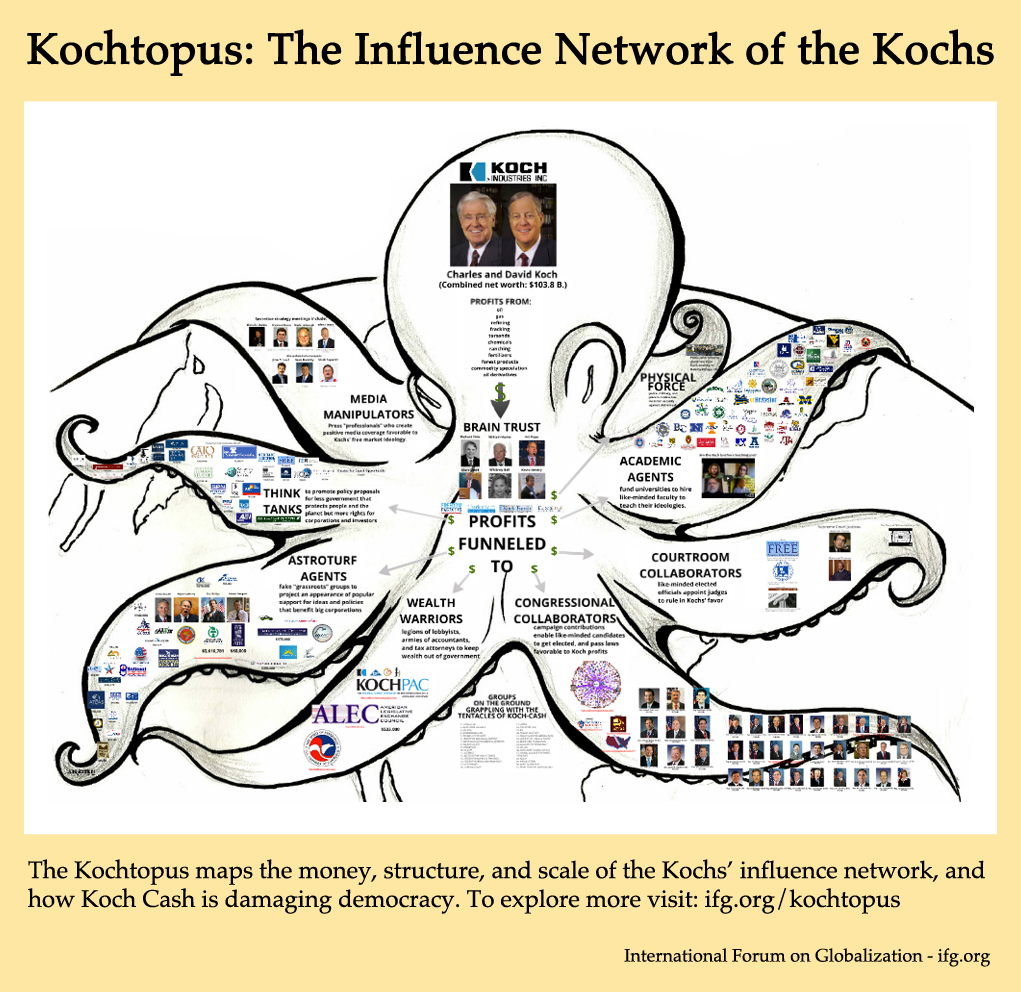
The usual suspects from the “Kochtopus,” who have fostered Arizona’s culture of corruption for years, have filed a challenge to the Outlaw Dirty Money initiative to keep it from the ballot, and deny Arizona citizens their right to vote on regulating their corrosive dark money spending in our elections.

The Arizona Capitol Times reports, Suit filed to stop dark money ballot:

Officials of two organizations known for anonymous [dark money] spending on political campaigns filed suit late Thursday to keep Arizonans from voting on a measure that would make the practice illegal.

The lawsuit charges that some of the paid circulators for the “Outlaw Dirty Money” campaign did not register ahead of time with the Secretary of State’s office as required by law. GOP Attorney Kory Langhofer also said that out-of-state residents who were carrying petitions also failed to register.

Langhofer claimed several other violations of initiative requirements, including that some circulators were convicted felons who had not had their civil rights restored. That, he said, makes them ineligible to gather signatures.

Among the plaintiffs are Scot Mussi, executive director of the Free Enterprise Club, and Andrew Clark, state director of Americans for Prosperity. Both organizations have made repeated expenditures in Arizona elections both to support candidates of their choice and to oppose others.

More to the point, both say their groups do not have to disclose their donors. That is based on their status under the federal tax code as “social welfare organizations” which are permitted to spend up to half their revenues on elections without being considered campaign committees.

Read more

SCOTUS conservatives continue their assault on voting rights

After sending two gerrymandering cases back to the lower courts for further deliberation last week, SCOTUS punts on two gerrymandering cases, the Court had two additional redistricting cases currently under consideration.

The Court also sent the case from North Carolina, Rucho v. Common Cause, back to the lower court this morning as well, Supreme Court sends case on North Carolina gerrymandering back to lower court:

The Supreme Court on Monday sent back to a lower court a decision that Republicans in North Carolina had gerrymandered the state’s congressional districts to give their party an unfair advantage.

The lower court will need to decide whether the plaintiffs had the proper legal standing to bring the case.

* * *

When a three-judge panel invalidated the map of congressional districts, it became the first to strike a congressional map on the grounds that it was rigged in favor of a political party [i.e., partisan gerymandering].

North Carolina has a past at the Supreme Court, with redistricting plans struck down as racial gerrymanders. So when the state legislature adopted new plans in 2016, Republican leaders made clear they were drawing the lines to help their party, instead of basing their decisions on racial data.

What these three remands mean is that Justice Anthony Kennedy is not yet ready to rule on partisan gerrymandering cases.

The conservatives on the Court did decide a racial gerrymandering case today from Texas, Abbott v. Perez (.pdf), in which a divided court split along ideological lines 5-4 largely siding with the state of Texas. Some disturbing opinions from Justices Thomas and Gorsuch suggested that the Voting Rights Act does not apply to racial gerrymandering in redistricting, in the conservatives continuing efforts to further gut the Voting Rights Act.

Read more